Are Traditional Productivity Tips Dead? Here's What Actually Works for Neurodivergent Minds
You know that feeling when productivity gurus tell you to "just break it down into smaller steps" and your brain goes completely blank? When they suggest color-coding your calendar and you feel overwhelmed before you even start?
You're not broken. The system is.
Traditional productivity advice wasn't designed for minds that move nonlinear. It wasn't created for brains that hyperfocus on passion projects at 2 AM but can't remember to eat lunch. It assumes a neurotypical operating system: one that can "just decide and do," prioritize based on importance rather than interest, and function without needing their nervous system regulated first.
Your neurodivergent brain has been trying to force itself into systems that were never meant for you. And honey, that three-day burst of color-coded perfection followed by complete collapse? That's not your fault. That's what happens when we try to run different software on the wrong operating system.
The Magic Your Mind Already Holds
Let's start with some truth-telling: your brain isn't deficient. It's different. Your hyperfocus cycles can't be scheduled like meetings. Your executive function challenges make "breaking tasks down" feel impossible when you can't figure out where to start. Your novelty-seeking brain finds routine systems torture, and your interest-based nervous system requires engagement, not just obligation.
These aren't bugs in your system: they're features. But they need different approaches.
Instead of fighting your natural rhythms, what if we designed systems that work with your beautiful, complex mind? What if productivity looked like energy optimization instead of time management? What if success felt inevitable instead of exhausting?
Why Your Brain Needs Its Own Language
The first step is abandoning traditional productivity language entirely. Your brain speaks a different dialect: one that honors emotional awareness as essential data rather than obstacles to overcome.
Emotional awareness becomes your superpower. Before prioritizing tasks, rate them with emotional indicators. Which ones need fresh morning energy? Which require quiet time for complex thinking? Which could boost your motivation for harder work later?
This isn't touchy-feely nonsense: it's practical neuroscience. Taking two minutes each morning to identify your current emotional state and energy level, then matching high-stakes work to optimal emotional availability, can transform your entire day.
Those "red flag" emotional reactions to certain tasks? They're not character flaws. They're your brilliant brain signaling mismatched timing or missing context. Listen to them.
The Three-Phase System That Actually Works
Phase 1: Master Balance and Mindset First

Before diving into productivity systems, your neurodivergent brain needs foundational emotional regulation. This means respecting your inner signals instead of powering through them.
Your feelings are data. When a task feels overwhelming, that's information. When you feel excited about a project, that's information too. Your emotional responses are telling you something essential about timing, energy, and readiness.
Create space to honor these signals. Build in buffer time. Allow for the natural ebb and flow of your attention and energy. This isn't laziness: it's sustainable productivity.
Phase 2: Build Dopamine-Friendly Reward Cycles
Here's what traditional productivity advice misses: your brain needs different fuel. Neurotypical brains can delay gratification and push through on willpower alone. Your neurodivergent brain needs more frequent dopamine hits to maintain motivation.
This is where celebration becomes strategic:
Sent an important email? Celebrate it.
Completed research for one section? Celebrate it.
Made it through a difficult conversation? Celebrate it.
Take 30 seconds to genuinely acknowledge the effort required for each completed task. This isn't indulgent: it's neuroscience. Celebration rituals increase dopamine availability for subsequent tasks, creating positive momentum loops instead of exhaustion cycles.
Phase 3: Create Systems That Match Your Operating System
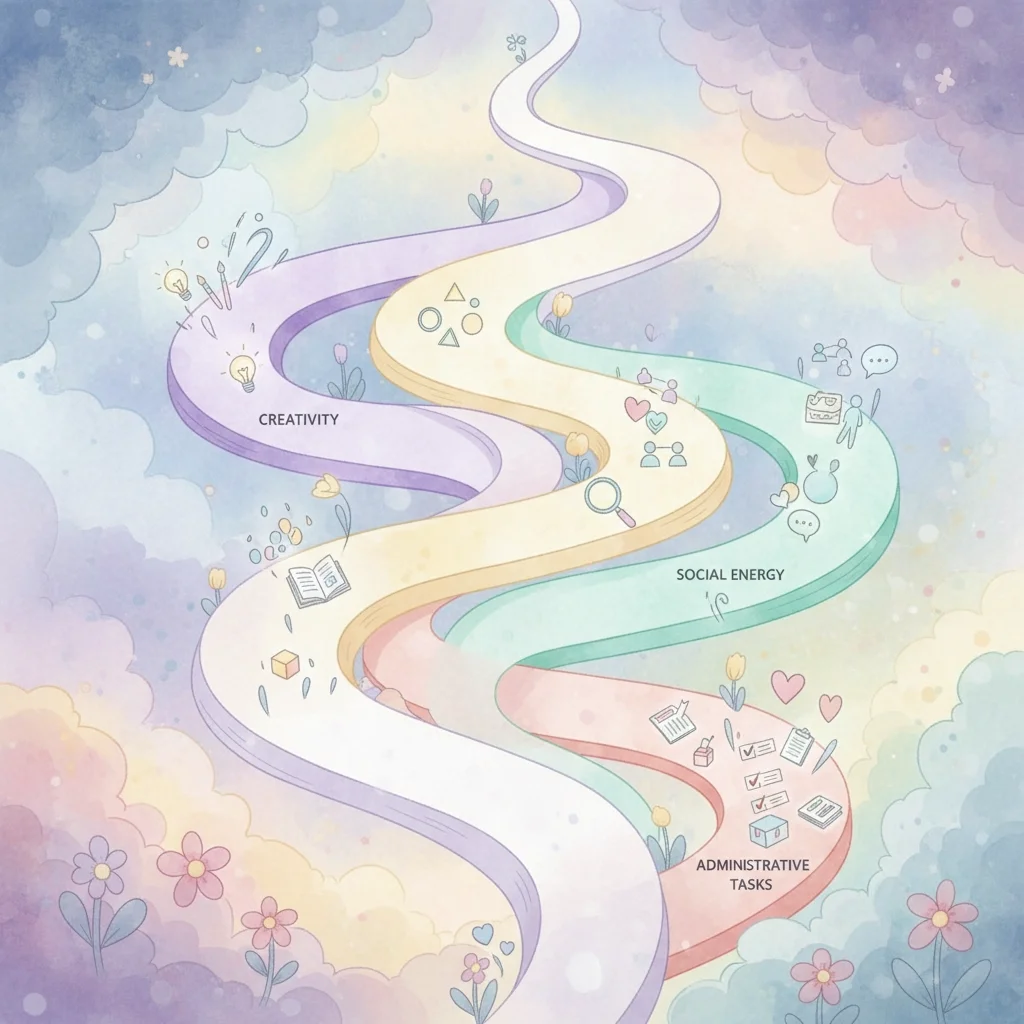
Now we build systems designed for how your brain actually works, not how productivity books think it should work.
Habit tracking becomes powerful when combined with visual progress and immediate feedback. But forget the 66-day habit formation myth. Your brain benefits from micro-goals that create visible streaks and instant gratification.
Task prioritization needs a new framework. While most productivity systems focus solely on urgency and importance, your brain needs to factor in emotional readiness and interest level. Create categories like:
Ready and energized
Interested but need support
Important but emotionally draining
Low energy, easy wins
Match your tasks to your current state instead of forcing yourself into predetermined schedules.
Practical Strategies That Honor Your Brain
Emotional Task Tagging
Transform those subjective feelings into actionable productivity data. Track mood patterns over time. Identify your optimal working conditions. Notice when you do your best creative work, when administrative tasks feel manageable, when complex problem-solving flows naturally.
Your patterns are magic. They're not random: they're your brain's natural rhythms trying to optimize your performance.
The Energy-First Approach
Instead of time-blocking (which can feel rigid and anxiety-provoking), try energy-blocking. Schedule tasks based on the type of energy they require:
High-focus energy: Complex creative work, important decisions
Social energy: Meetings, collaborations, networking
Administrative energy: Email, organizing, routine tasks
Recovery energy: Planning, reflecting, gentle organizing
This honors your natural fluctuations instead of fighting them.
Interest-Based Productivity
Your brain is wired for interest, not importance. Work with this instead of against it:
Passion stacking: Pair boring tasks with elements you find engaging
Novelty injection: Regularly rotate your tools, locations, or approaches
Curiosity following: Allow interested-based rabbit holes (with boundaries)
The Transformation Is Real
The most beautiful part? You don't need to fix anything about yourself. You need systems that finally match your magnificent, complex brain.
When neurodivergent individuals adopt brain-specific strategies, extraordinary things happen. They complete athletic challenges. Build successful creative practices. Develop sustainable routines that actually stick. All while feeling more like themselves, not less.

The raw material of your mind isn't broken: it just needs different processing. Your scattered attention becomes multi-dimensional thinking. Your hyperfocus becomes deep-dive expertise. Your sensitivity becomes intuitive awareness.
Your magic doesn't fit in straight lines. And that's exactly what makes it powerful.
Your Invitation Forward
This isn't about becoming more productive by neurotypical standards. This is about discovering what productivity looks like when it's designed specifically for you. When it honors your rhythms, feeds your curiosity, and celebrates your unique way of moving through the world.
Start small. Pick one strategy that feels intriguing rather than overwhelming. Notice what happens when you work with your brain instead of against it.
Your neurodivergent mind has been waiting for systems that finally make sense. Systems that feel like coming home instead of forcing yourself into spaces that never quite fit.
You belong here. Your way of thinking belongs here. Your magic: messy, brilliant, nonlinear: belongs here.
What would it feel like to finally stop apologizing for how your beautiful brain works?
