Late Diagnosis Relief vs. Late Diagnosis Grief: Which Stage Are You In?
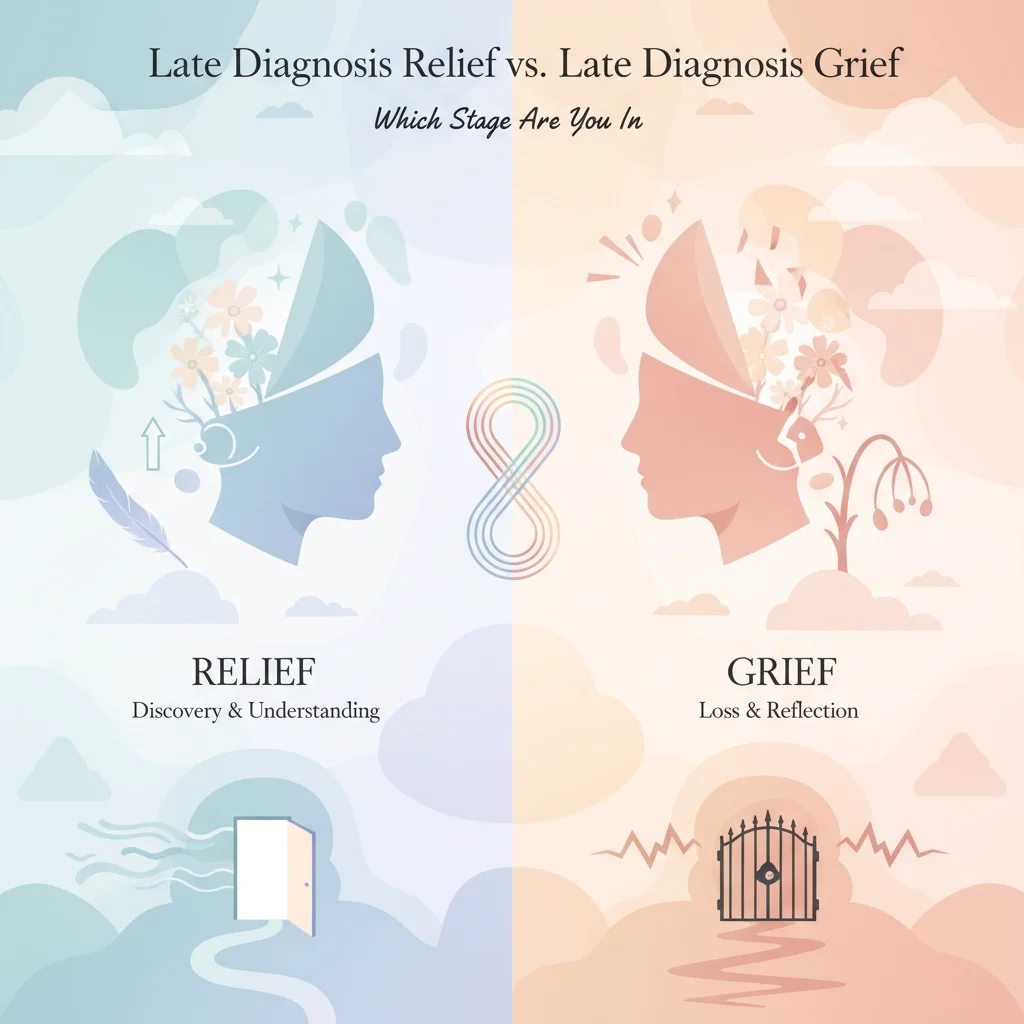
You finally have the words. After years of wondering, questioning, searching, you have an answer that feels like home.
But then something strange happens. Along with the relief comes something heavier. Something that feels like loss.
You're not broken for feeling both.
Getting a late diagnosis, whether it's ADHD, autism, or another neurodivergent condition, often brings a tangle of emotions that don't follow any neat timeline. You might find yourself cycling between "Finally, this makes sense!" and "What if I'd known sooner?" sometimes within the same hour.
Your feelings are valid. All of them.
When Relief Feels Like Coming Home
There's something magical about finally having language for your experience. Relief in late diagnosis often feels like:
Recognition. Oh, this is why I've always...
Validation. I wasn't making it up. I wasn't being dramatic.
Permission. I can stop trying so hard to be someone I'm not.
This relief can be overwhelming in its intensity. Years of self-blame start to dissolve. Those moments when you felt different, difficult, or "too much" suddenly make perfect sense. You weren't failing at being neurotypical: you were succeeding at being you, just without the right support.
The relief might show up as:
A deep exhale you didn't know you were holding
Excitement about finally understanding yourself
Hope for what support and accommodations might look like
Gratitude for your brain's unique way of moving through the world
This relief is not selfish. It's not wrong to feel glad about your diagnosis.
When Grief Sits Heavy in Your Chest
But alongside that relief, grief often arrives uninvited. And this grief is real, valid, and necessary.
You're mourning what could have been.
Late diagnosis grief isn't about mourning your neurodivergence: it's about mourning the years spent without understanding, support, or acceptance. It's grief for:
The child who struggled in silence
The teenager who felt broken
The young adult who couldn't understand why everything felt so hard
The relationships that were strained by unmet needs
The opportunities that slipped away
The version of yourself who spent years believing you weren't enough
This grief moves through you in waves. Some days it's anger: Why didn't anyone notice? Why wasn't this caught earlier? Other days it's sadness for all the times you blamed yourself for struggling with things that seemed easy for everyone else.
Your grief deserves space. It deserves to be felt.
The Dance Between Relief and Grief
Here's what nobody tells you: these emotions don't take turns.
You might feel overwhelming relief in the morning and deep grief by evening. You might feel grateful for your diagnosis while simultaneously angry about the timing. You might celebrate finally understanding yourself while mourning the years you spent misunderstanding yourself.
This emotional complexity isn't confusion: it's completeness.
The stages of grief: denial, anger, bargaining, depression, acceptance: they don't follow a neat line when it comes to late diagnosis. You might cycle through them, skip some entirely, or experience several at once.
Some days you'll bargain: What if I'd been diagnosed at 8 instead of 28?
Some days you'll feel angry: How many people failed to see what was right in front of them?
Some days you'll try to deny the impact: It doesn't matter when I was diagnosed. I'm fine.
And all of these responses are part of your healing.

Your Emotions Don't Need Permission
Maybe you're reading this wondering if you're "allowed" to feel grief about a diagnosis that's ultimately helpful. Maybe you're questioning whether your relief is somehow selfish or wrong.
Listen carefully: Your emotions don't need anyone's permission to exist.
You can feel grateful for finally having answers and sad about the journey it took to get them. You can feel relieved about understanding yourself better and angry about the years spent struggling without support.
You can celebrate your neurodivergent brain and mourn the neurotypical life you thought you were supposed to live.
These feelings can coexist because you are complex, beautiful, and human.
Your late diagnosis is both an ending and a beginning. It's the end of not knowing, of blaming yourself, of trying to fit into spaces that weren't made for you. And it's the beginning of understanding, of self-compassion, of finding your people and your place.
Moving Forward with Both
As time passes, most people find that relief gradually becomes the stronger of the two emotions. The grief doesn't disappear entirely: it becomes integrated, a acknowledgment of what was while celebrating what is and what's possible.
The relief starts to feel like coming alive.
You begin to see your struggles not as personal failures but as a mismatch between your needs and your environment. You start to seek out communities, resources, and accommodations that actually work for your brain. You begin to rewrite your story: not as someone who was broken, but as someone who was misunderstood.
The grief becomes gentler too. Instead of sharp pain, it might show up as compassion for your younger self or determination to help others get diagnosed earlier. It becomes part of your story rather than the whole story.

What Stage Are You In?
Maybe you're in early relief, still marveling at finally having words for your experience. Maybe you're deep in grief, processing decades of struggle. Maybe you're cycling between both, wondering when it will feel simpler.
Wherever you are is exactly where you need to be.
There's no timeline for processing a late diagnosis. There's no "right" way to feel about it. Some people move through it in months, others take years. Some experience more relief, others more grief. Some cycle between the two for a long time.
Your pace is your pace. Your feelings are your feelings.
You Belong Here
Whether you're feeling relief, grief, or something in between, your experience matters. Your story matters. The years you spent struggling without answers matter, and so does this moment of having them.
You were always worthy of understanding. You were always worthy of support.
Now you have the language to ask for what you need. Now you have the framework to understand your beautiful, complex brain. Now you have permission to be exactly who you are.
This is your moment of coming home to yourself.
Whatever stage you're in, you're not walking this path alone. Share your story in the comments below: we read with care and curiosity. And if you're looking for more conversations about the beautifully complex experience of late diagnosis, check out our podcast where we dive deep into these very real, very human moments.
Your magic doesn't fit in straight lines. And that's exactly as it should be.
